

Healthy Women Build Healthy Families: Why Your Health Comes First
A woman often becomes the quiet centre of a family’s wellbeing. She notices when a child has a fever, when an older parent skips medicine, when the kitchen needs healthier food, and when everyone else needs rest. Too often, her own health is the last item on the list.
That pattern is common, but it is not harmless.
When women delay care, ignore tiredness, skip meals, or treat pain as “normal”, the effect reaches far beyond one person. Energy drops. Stress rises. Small health issues can become harder to manage. A family may still run, but it runs on strain.
The message behind Healthy Women Build Healthy Families: Why Your Health Comes First is simple: caring for yourself is not selfish. It is one of the most practical ways to care for the people you love.
This article is for general information only. It does not replace medical advice, diagnosis, or treatment from a qualified health professional.

Women’s health shapes the health of the whole family
Families learn health habits through daily routines, not lectures. What gets cooked at home, how sleep is treated, whether check-ups are normal, and how stress is handled all become part of family culture.
When a woman protects her health, she often models habits that others absorb:
Eating regular, balanced meals
Taking symptoms seriously
Making time for rest
Going for preventive health checks
Speaking openly about mental health
Prioritising movement and outdoor time
This influence matters, but it should not become another burden. Women should not have to be healthy only because others depend on them. They deserve good health in their own right.
Still, the family benefit is real. A mother, daughter, sister, wife, grandmother, or caregiver who feels supported is more likely to have the strength and clarity to support others. A healthier woman can make better decisions, set better boundaries, and respond to family needs without constantly running on empty.
Putting your health first is a form of prevention
Many health problems do not begin with a dramatic warning sign. They start quietly.
A little breathlessness while climbing stairs. Heavy periods that seem “normal”. Frequent headaches. Mood changes. Back pain after daily chores. Fatigue that does not improve with sleep. These signs are easy to dismiss, especially when there is work, cooking, childcare, studies, or elder care to manage.
Prevention means paying attention before the problem grows.
In India, many women commonly deal with concerns such as anaemia, vitamin deficiencies, thyroid problems, diabetes, high blood pressure, polycystic ovary syndrome, menstrual health issues, and bone health concerns. Not every symptom points to a major illness, but repeated symptoms deserve care.
A preventive approach may include:
Regular blood pressure checks
Basic blood tests as advised by a doctor
Screening for diabetes where risk is present
Cervical cancer screening as recommended
Breast awareness and medical review for changes
Dental and eye check-ups
Vaccinations as advised for age and health status
Preventive care is not about fear. It is about catching issues early, when they are often easier to treat or manage.
The basics are not small when they happen every day
Health advice can sound too simple: eat well, sleep enough, move your body, drink water, manage stress. The reason these basics keep coming up is that they affect almost every part of life.
They also work best when they are realistic.
A woman managing a household, job, farm, shop, classroom, or caregiving duties may not have an hour for exercise every morning. That does not mean health has to wait. Small, consistent actions can still help.
Eat for steady energy
Balanced meals do not need to be expensive or complicated. A plate with grains, dal or other protein, vegetables, and some healthy fat can support energy better than long gaps followed by tea and snacks.
Practical Indian options include:
Dal, rice, sabzi, and curd
Roti with chana, rajma, egg, paneer, fish, or chicken
Poha or upma with vegetables and peanuts
Idli or dosa with sambar
Millet-based meals where available
Seasonal fruits as snacks
Nuts, roasted chana, sprouts, or boiled eggs for extra protein
Iron-rich foods such as leafy greens, dals, beans, eggs, meat, and jaggery-based traditional foods can help support iron intake, though medical treatment may be needed for anaemia. Vitamin C foods like amla, guava, lemon, and oranges can help the body absorb plant-based iron better.
Skipping meals is not a badge of strength. It often leads to fatigue, acidity, irritability, and overeating later.
Move in ways that fit real life
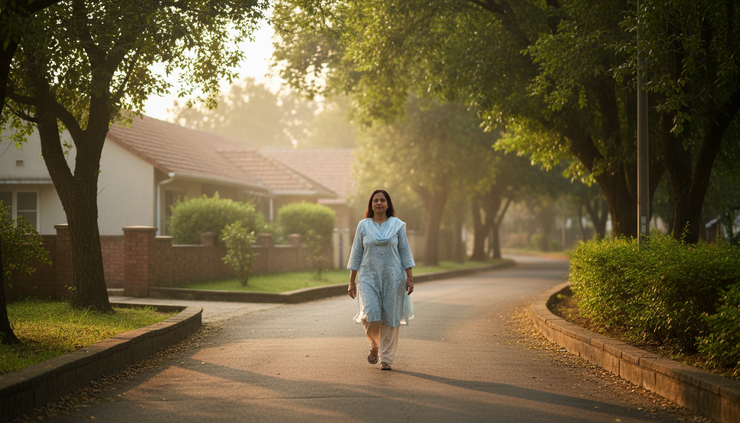
Movement does not have to mean a gym membership. Walking, stretching, gardening, dancing, yoga, cycling, climbing stairs, or doing simple strength exercises at home can all count.
Strength matters especially for women because muscle and bone health affect ageing, posture, balance, and daily comfort. Carrying groceries, lifting a child, or standing for long hours becomes easier when the body is stronger.
A simple starting point can be:
Ten minutes of walking after a meal
Gentle stretching in the morning
Two rounds of squats using a chair for support
Wall push-ups
Light household movements done with better posture
Yoga or breathing practices guided by a trained teacher
The best exercise plan is the one that can continue during ordinary weeks, not only during perfect weeks.
Protect sleep like medicine
Sleep is often the first thing sacrificed when life gets busy. Yet poor sleep affects mood, immunity, memory, appetite, and blood sugar control. It can also make pain feel worse.
Better sleep does not require a perfect routine. Start with the basics:
Keep a steady sleep and wake time when possible
Reduce phone use close to bedtime
Avoid heavy meals very late at night
Keep the room cool and dark where possible
Share night duties when caring for young children or elders
Seek medical help for loud snoring, breathing pauses, or severe insomnia
Rest is not laziness. It is repair.
Mental health is family health too
A woman may keep functioning while feeling anxious, low, angry, numb, or constantly overwhelmed. Because she continues to do her duties, others may not notice how much she is struggling.
Mental health needs the same respect as physical health. Stress can show up as headaches, stomach troubles, poor sleep, fast heartbeat, body pain, or loss of interest in everyday life. Hormonal changes, pregnancy, postpartum recovery, grief, financial pressure, relationship stress, and caregiving strain can all affect emotional health.
Support can begin with honest language:
“I am not okay.”
“I need help.”
“I need rest.”
“I need to see a doctor or counsellor.”
These sentences can be difficult to say, especially in families where women are expected to manage everything quietly. But silence does not heal stress. Support, treatment, rest, and safer relationships do.
If there are thoughts of self-harm, fear of violence, or severe emotional distress, it is urgent to seek immediate help from trusted people nearby and emergency or medical services.
Reproductive and hormonal health should not be ignored
Many women grow up believing that pain and discomfort are simply part of being a woman. Some discomfort during periods can happen, but severe pain, very heavy bleeding, irregular cycles, bleeding after sex, unusual discharge, pelvic pain, or sudden changes should be checked.
Reproductive health is not only about pregnancy. It includes menstrual health, contraception, fertility, infections, menopause, sexual health, and respectful medical care.
Women also deserve privacy and dignity during healthcare visits. Questions about periods, pregnancy, sexual activity, or contraception should be handled without shame. A good healthcare provider explains options clearly and listens without judgement.
During pregnancy and after childbirth, health needs become even more important. Antenatal care, nutrition, rest, mental health support, and postpartum check-ups help protect both the woman and the baby. After delivery, many women receive attention only as mothers. Their healing, pain, bleeding, mood, sleep, and nutrition still matter.
Menopause also deserves better conversation. Hot flushes, sleep changes, mood shifts, joint pain, vaginal dryness, and bone health changes can affect quality of life. Medical advice can help women manage this stage with comfort and confidence.

Families must stop treating women’s care as optional
A woman’s health should not depend only on her willpower. Families, communities, and health systems all play a role.
At home, support can look very practical:
Sharing cooking, cleaning, and caregiving
Making space for medical appointments
Respecting rest time
Encouraging healthy meals for everyone, not only for the woman who is unwell
Taking pain and symptoms seriously
Supporting exercise without criticism
Avoiding shame around reproductive or mental health
For many women, the barrier is not lack of knowledge. It is lack of time, money, permission, transport, or emotional support. A family that values women’s health helps remove these barriers.
This is where the idea that healthy women build healthy families becomes more than a slogan. It becomes a shared responsibility. If everyone benefits from her care, everyone should also contribute to her care.
Build a simple health-first routine
A health routine works best when it is clear and manageable. Big plans often fail because they demand too much too soon. A simple weekly rhythm can create change without adding pressure.
Health area | Simple starting habit | Why it helps |
Food | Add one protein source to breakfast | Supports energy and fullness |
Movement | Walk for 10 to 20 minutes most days | Helps heart health, mood, and stamina |
Sleep | Set a fixed bedtime on weekdays | Supports recovery and routine |
Hydration | Keep a water bottle nearby | Reduces missed water intake |
Check-ups | Book one pending appointment | Prevents delayed care |
Mental health | Speak to one trusted person | Reduces emotional isolation |
Start with one habit for two weeks. Once it feels normal, add another. Health grows through repetition.
A monthly self-check can help
Choose one day each month to ask:
Has my energy changed?
Are my periods different from usual?
Am I sleeping well?
Is any pain repeating?
Have I felt unusually low, angry, or anxious?
Do I need a check-up, test, or follow-up?
Am I getting enough support at home?
This is not for self-diagnosis. It is a way to notice patterns and seek help early.
Your health is not a reward for finishing everything else
Many women promise themselves rest after the kitchen is clean, after the children’s exams, after the festival, after the next salary, after the family wedding, after everyone else is settled. But life keeps adding new tasks.
Health cannot wait for an empty calendar.
Care can begin in ordinary ways today. Eat before you feel faint. Sit down when your body asks for rest. Book the check-up you have postponed. Tell someone when you need help. Step outside for a walk. Ask questions at the clinic. Take prescribed medicines properly. Sleep without guilt.

The strongest families make room for women’s wellbeing
A healthy family is not built by one person sacrificing endlessly. It is built when care moves in both directions.
When a woman’s health comes first, children learn that bodies deserve respect. Partners learn that support is daily work. Older family members see that prevention matters. Communities become stronger because women have more energy, safety, and dignity.
Your health is not a side issue. It is the ground beneath your work, relationships, dreams, and caregiving. Put it on the calendar. Speak about it without apology. Protect it with the same seriousness you give to everyone else’s needs.
A family becomes healthier when the woman at its centre is not running on empty.

Comments